What Tabletop RPGs Offer Players Beyond Rules and Dice
Since long before there were screens and rulebooks to enhance the experience, people have always been drawn to stories. We sat around fires and told each other exciting tales about distant lands, strange creatures, dangerous journeys, and all the choices that shaped them.
And these stories weren’t just entertainment, either. They were how people made sense of concepts like loss, hope, fear, and survival.
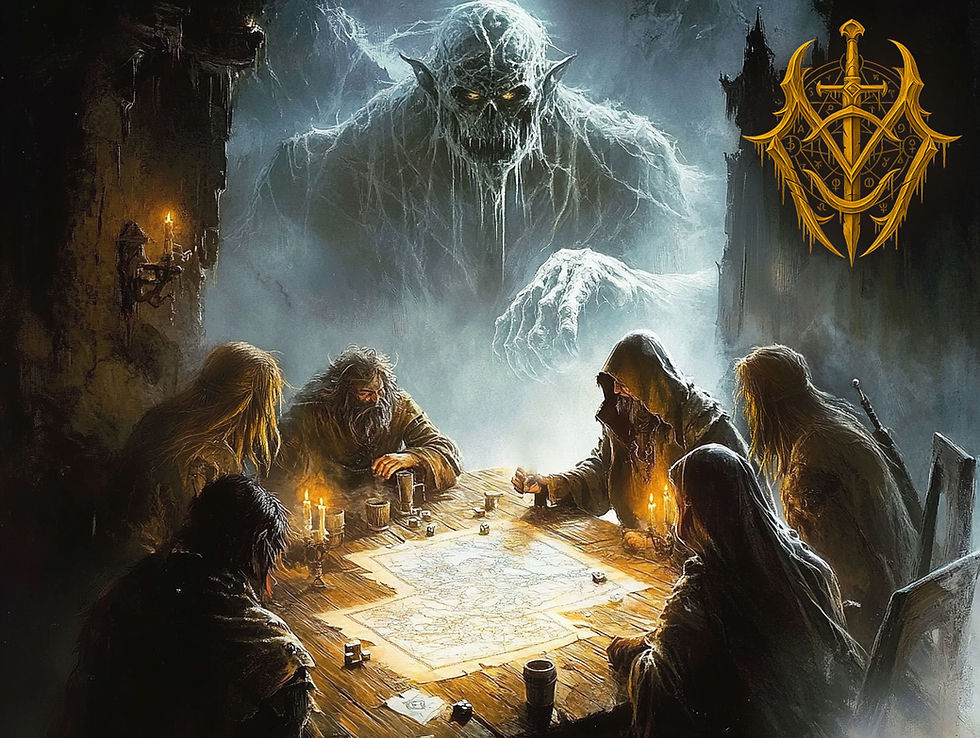
So when friends sit down at a table to enjoy an RPG together, they’re tapping into something very old. For a few hours, the world narrows itself down to a table, a few trusted voices, and an atmosphere reliant on shared imagining.
Tabletop RPGs may not have invented that feeling. But they did give it a very special home that makes something genuinely special out of attention, trust, and creativity.
From Myth to Tabletop
At their core, tabletop role-playing games are collaborative stories. Instead of one person controlling everything, the world of the game takes shape through conversation, choices, and imagination.
This type of storytelling has its roots in ancient myths and legends that were never intended to stay static. They were meant to evolve from telling to telling, changing slightly with each new voice that passed the stories on to someone else.
RPG players aren’t passively watching their story’s heroes from a distance. They’re responsible for them, and decisions made at the table affect what happens to them. Outcomes feel personal and alive because everyone present helped build the road that led a character wherever he ultimately ends up.
Why Fantasy Keeps Returning
Fantasy, in particular, keeps resurfacing in the books, movies, games, and shows we love for a reason. It gives us an enjoyable framework for exploring complex or difficult ideas without pretending they don’t exist.
Imagined worlds give us a safe, unique opportunity to look directly at power, loyalty, belief, and even brutality. We get to explore what people actually become under pressure, what they’ll sacrifice when things go sideways, and what they’re willing to protect at any cost when the chips are down.
Tabletop RPGs take this a step or two further. Instead of simply presenting a world for someone’s consideration, they invite people to actually live inside it. Players are further asked to accept that choices have consequences that don’t simply disappear when the session ends.
What Players Are Really Looking For
Players aren’t drawn to darker, deeper, more immersive tabletop gaming experiences because they’re looking for spectacle. They’re actually looking for meaning:
· Danger gives weight to choices
· Consequences help successes feel truly earned
· Worlds with the capacity for change hold attention and maintain depth
Players sense differences like these instinctively, as they’re looking for settings that actually take them seriously. Think worlds that push back, respond, and remember from one visit to the next. Worlds with genuine weight invite commitment and ask players to show up fully.
Entering the Mortal Realms
Mortal Existence was built with this core understanding in mind. Decades in the making, it’s a dark, fully immersive tabletop RPG project that continues to take shape slowly and with intention.
The game itself unfolds across five different manuals, each supported and enhanced by original artwork, rich lore, unsettling creatures, and more. It asks players to inhabit it, rather than simply glance at it. It also offers access to a setting that reveals what it truly is over time via ongoing exploration, consequence, and survival.
Before the Dice Are Rolled
Every tabletop game starts the same way. Before anyone rolls the dice, speaks in character, or even reviews the rules, people arrive. There’s a quiet sense present that an entire world is right there waiting for them, and the air crackles with possibility.
Mortal Existence starts at that very same place, the threshold between reality and endless possibility. Players understand right from the get-go that they’re about to step into an experience with its own original history, thrilling dangers, and carefully curated truths.
Those dice will come soon enough. First, there’s the world itself.


Comments